
Office design is changing fast, but the shifts we’re seeing for 2026 aren’t just trends: they’re structural.
Instead of designing around headcount or aesthetics alone, the 2026 office design outlook is driven by real data on how people really move, sit, meet, and focus over the course of a day.
Hybrid routines, well-being, and sustainability are now shaping every decision, from the furniture to the lighting and ventilation.
If you’re planning a new look for your office for the new year, understanding where designs are heading will help you make decisions that don’t just look good, but also stand up to daily use.
This article explores the outlook for 2026 office design and how we can help you create the office you and your employees want. For personalised advice, contact our team at HQ Renovations today.
Human-Centric Design Comes First
One of the biggest shifts for 2026 is a move from ‘how the office looks’ to ‘how the office feels’.
Office design is becoming more human-centric, with spaces designed to support:
- Long periods of seated and semi-mobile work
- Micro-movements and posture changes
- Cognitive load and concentration across the workday
This plays out in details like:
- Task chairs and systems furniture that support subtle shifts and recline
- Armrests, surfaces, and desk edges shaped to reduce strain
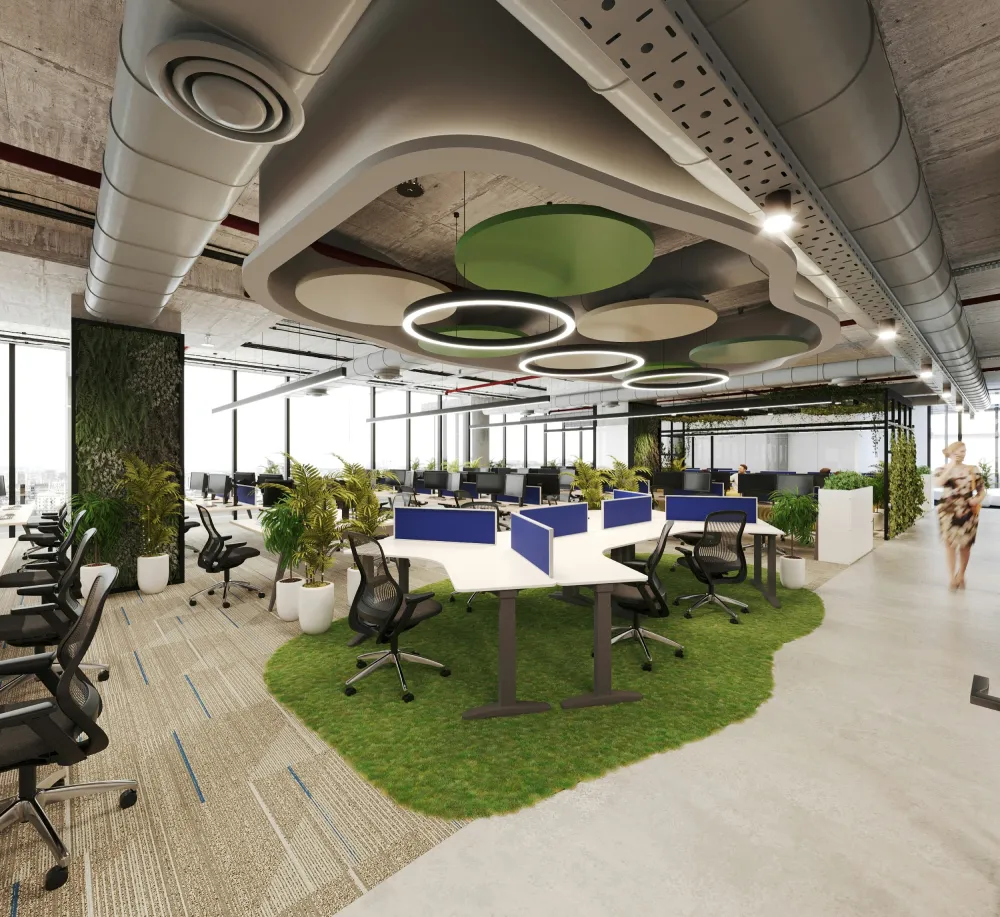
- Ventilation, lighting, and workstation layouts designed as one system instead of separate components
We’re already seeing this in our Cat B fit outs and office refurbishments. Instead of treating furniture, lighting, and air conditioning separately, we design them together so that comfort, focus, and well-being are built in from the start.
Hybrid and Optimised Layouts Based on Real Use
Office layouts in 2026 will be shaped around how people actually use them, not guesswork. This means:
- Zones sized to match how often they’re used and by how many people
- Wider circulation routes where people naturally converge
- Narrower routes where movement slows
- Acoustic treatment where people actually talk, not just where it ‘looks right’
For our London clients who are looking to refurbish multi-floor spaces, we’ll use observed behaviour and feedback to re-plan offices into clear collaboration hubs, quieter team areas, and focused zones.
Activity-Based Working Zones as the New Normal
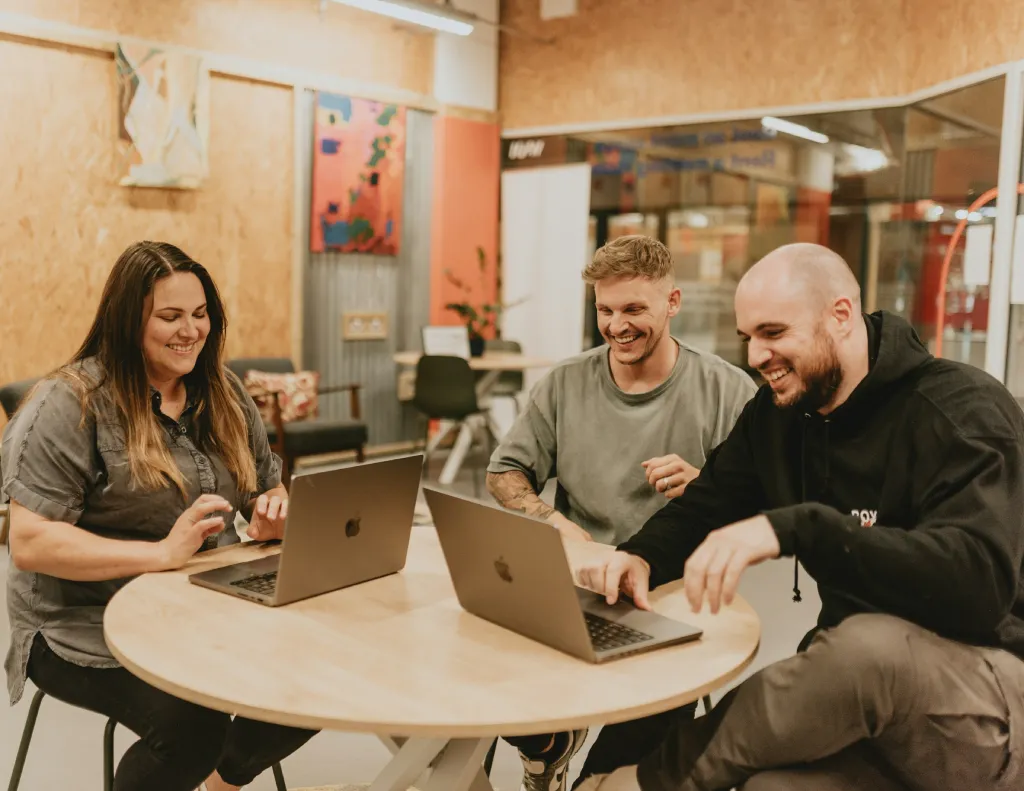
Workplaces are moving away from ‘one desk, one person’ and towards activity-based environments that support different tasks and mindsets.
This looks like:
- Quiet nooks for deep concentration
- Open collaboration spaces for quick huddles
- Enclosed, acoustically-treated rooms for calls and presentations
- Semi-open project areas for ongoing teamwork
- Social spaces for informal conversations and decompression
Each setting is designed for a specific type of work, but all are integrated into one coherent plan.
We offer both office interiors and Cat B fit outs with this activity-based approach in mind. During the design phase, we use CGIs and 2D and 3D space planning to show how these zones fit together before construction begins.
This way, your office supports how your people actually work instead of forcing them to improvise.
Circular, Crafted, and Local Materials
Sustainability in 2026 isn’t just about adding plants. It’s about which materials are used, how they’re made, and what happens at the end of their life.
Designers and manufacturers are increasingly:
- Choosing substrates that can be easily disassembled and recycled
- Avoiding unnecessary composites
- Exposing or simplifying fixings so components can be repaired or reused
- Selecting low-VOC finishes
When we design offices in London in 2026, we can specify flooring, joinery, and finishes that align with this circular approach. We’ll focus on this for our office refurbishments and Cat B fit outs, where material choice can significantly impact sustainability.
Lighting That Supports Endurance and Focus
Lighting design is becoming more scientific and personalised.
In 2026, most forward-thinking offices will:
- Match light levels and colour to different tasks (screen work, reading, meetings, conversation)
- Use fixtures placed according to sightlines, not just ceiling grids
- Adjust brightness and tone based on time of day and occupancy patterns
We can integrate this kind of lighting strategy based on well-being as part of your fit out or refurbishment project. At HQ Renovations, we integrate lighting upgrades, ventilation improvements, and electrical services to help you prepare a healthier and more comfortable workplace.
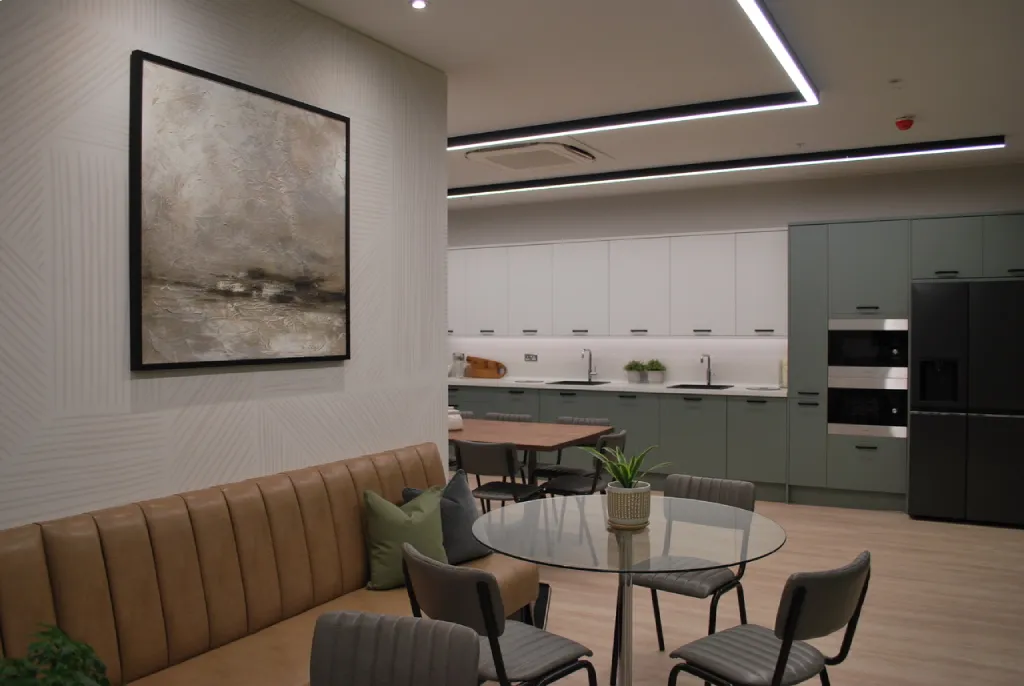
HQ Renovations Brings 2026 Office Design to Life
All of these trends are only useful if they can be translated into real, buildable spaces. At HQ Renovations, that’s what we’re here to do. If you’re planning a new fit out, refurbishment, or office design project in London, we can guide you from first sketch to final styling. Contact us today to discuss your 2026 office plans.